Source dual head sustainable pet toothbrush for dogs, cats, and daily care
Explore 30 dual head sustainable pet toothbrush options designed for effective oral hygiene. Compare materials, bristle types, and packaging to find the right fit for your pet care line; compare the available evidence and request quotations based on your requirements.
Key considerations
Products List
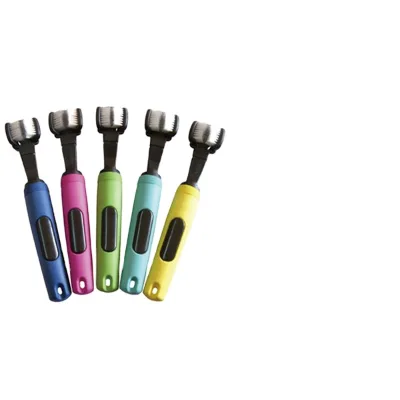


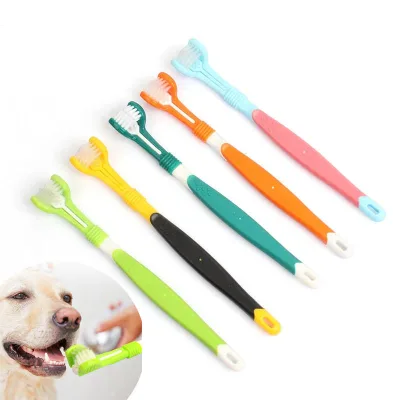


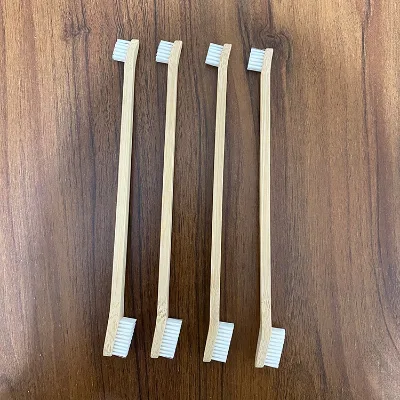


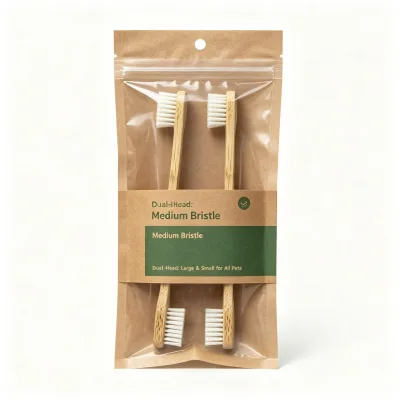

Comprehensive Sourcing Guide
Dual Head Sustainable Pet Toothbrush Sourcing Guide
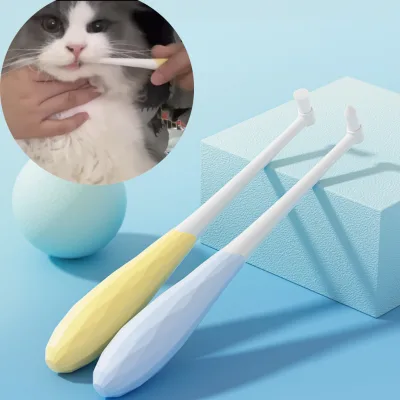
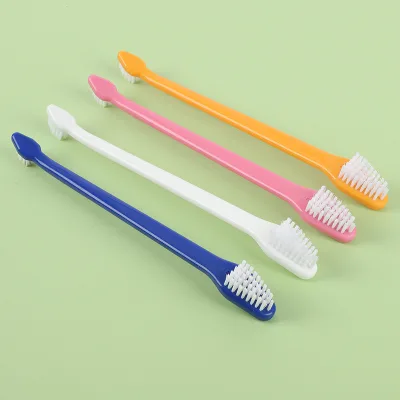
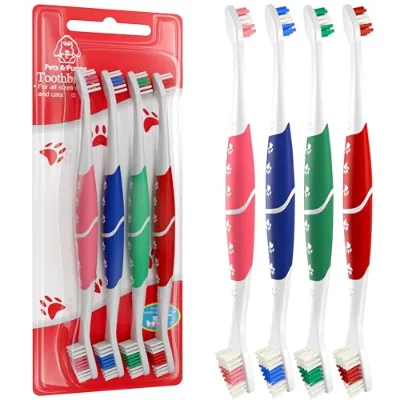
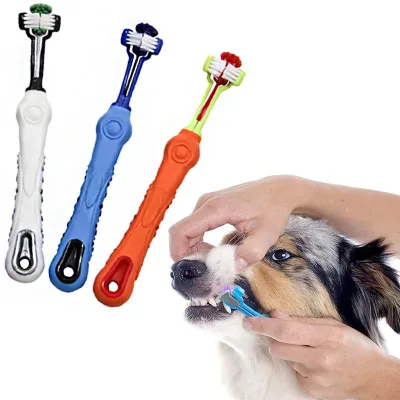
Sourcing a dual head sustainable pet toothbrush requires balancing two product philosophies that suppliers in this category often blend: the mechanical benefit of a two-ended brush design and the material story of sustainability. The dual head format is widely used for daily tooth cleaning in dogs and cats, letting groomers and pet owners switch between a larger head for back teeth and a smaller head for front teeth or small breeds without changing tools. For B2B buyers, this category sits alongside finger brushes and single-head manual brushes, so positioning and packaging decisions matter as much as the mold itself.
Before issuing requests for quotation, define which sustainability claims you intend to make in your own market. Sustainable positioning can refer to material composition, durability that reduces replacement frequency, or reduced packaging waste, and each interpretation leads to different supplier questions. The listings observed in this category are dominated by manufacturers in Fujian and Yangzhou, China, offering OEM and ODM customization, which gives buyers room to differentiate but also places the burden of verification squarely on the procurement team.
Product Scope and Observed Listing Signals
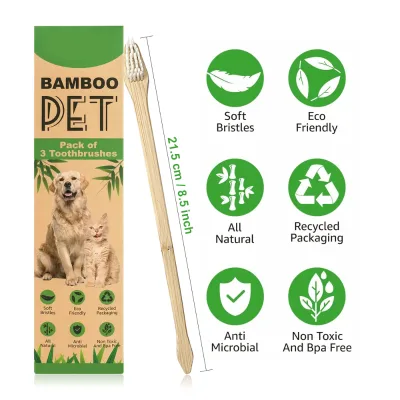
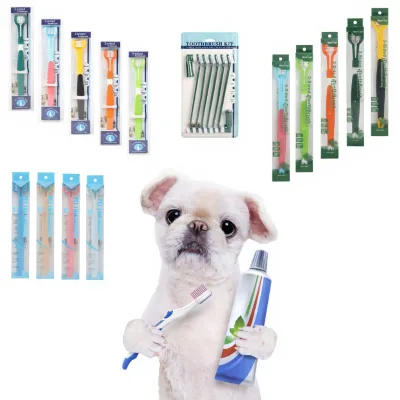
The observed listings reveal a broad specification spread. Model numbers such as FN-TB204, KD-PT38, KD-PT35, KD-PT18, KD-PT27, and P030 appear across suppliers, with stated sizes ranging from compact dimensions like 2.361.06inch and 173cm up to a Large option, and one listing at 217*17mm. Bristle materials are described as nylon in soft, medium, and hard variants, with one listing combining plastic and PVC brush components. Stated applications consistently cover dogs and cats, though some items specify dogs only, so confirm species suitability per SKU.
Commercial signals are equally varied. The observed price range runs from $0.02 to $3.43 per unit, with MOQs spanning 1 to 28,800 pieces, indicating both sampling-friendly and volume-oriented listings. Packaging options include ppbag plus normal carton, box, blister card, and single-item packing. Features such as Eco-Friendly, Waterproof, manual operation, and a finger-stand design that is easy to operate appear in the data, but treat these as observations from individual listings rather than category guarantees. One supplier states a supply ability of 20,000 pieces per month, a useful benchmark when comparing capacity.
Technical Specifications to Verify
Material verification is the first technical gate. Listings describe nylon bristles in soft, medium, and hard grades, and one listing cites plastic plus PVC brush construction. Ask each supplier to specify exactly which polymer grades are used for the handle, the neck, and the bristles, since "plastic" and "PVC" cover very different safety and recyclability profiles. If your sustainable positioning depends on the material, request written confirmation of the polymer type and whether recycled or bio-based content is available, rather than accepting a generic Eco-Friendly label.
Physical specifications need equal scrutiny. The observed dimensions vary widely, from roughly 17cm to 21.7cm in length, and head size must match the intended animal. A dual head design adds a further check: confirm that both ends are usable independently, that the smaller head suits cats or small dogs as claimed, and that the bristle firmness on each end matches your specification. Confirm Waterproof status per model, since listings conflict—one states Waterproof, another Not Waterproof. Also verify bristle tip rounding, bristle anchoring strength, and neck flex, none of which are captured by listing data alone.
Compliance and Safety Documentation
Pet oral hygiene products generally fall outside mandatory human dental standards, but buyers should still build a documentation package before committing to production. Request material safety declarations for the handle plastic, bristle nylon, and any PVC component, including statements on heavy metals, BPA, and phthalates where the supplier's material composition makes them relevant. If you sell into markets with pet product or general consumer goods regulations, ask the supplier which, if any, testing they already hold for this product family rather than assuming certificates exist.
Because sustainability is part of the core keyword, documentation must support any environmental claim you plan to print. Ask whether the supplier can substantiate Eco-Friendly labeling with material composition data, and clarify whether the claim refers to the product, the packaging, or both. The observed packaging formats—ppbag with carton, box, and blister card—carry different recyclability implications for your market. Finally, confirm country of origin documentation; listings state made in China with origins in Fujian and Yangzhou, and dispatch via FOB Xiamen appears in the data, which affects your import paperwork.
Cost Drivers and Commercial Terms
The observed price band of $0.02 to $3.43 reflects real differences in construction, materials, and order structure rather than a single product class. Main cost drivers include bristle grade (soft, medium, or hard nylon), dual head tooling complexity, handle material, packaging format, and customization level. Blister card packaging typically costs more than ppbag plus carton, and box packaging sits somewhere between. When comparing quotes, normalize for packaging first, then bristle specification, then any color or branding customization, since listings indicate customized colors are available.
Commercial terms in the observed data provide negotiation anchors: one listing states 7–10 days sample lead time, 30–45 days delivery after deposit and sample approval, a 20,000 pieces per month supply ability, and FOB Xiamen dispatch. Treat these as that supplier's terms and request equivalents from every candidate. MOQs observed range from 1 to 28,800 pieces, so clarify whether low-MOQ listings apply to stock colors only and whether customized colors or private-label packaging trigger higher minimums. Confirm deposit percentages, tooling fees for ODM work, and whether sample costs are credited against bulk orders.
Supplier Qualification and Quality Control
Qualify suppliers around production capability rather than listing polish. The two observed production regions—Fujian and Yangzhou—are both established bases for pet cleaning products, but capability varies by factory. Ask about in-house bristle tufting versus outsourced assembly, mold ownership for dual head designs, and monthly capacity relative to your forecast; the stated 20,000 pieces per month benchmark suggests what a mid-size factory reports, so verify how capacity is allocated across existing customers. Confirm whether the supplier genuinely offers OEM and ODM, and ask for examples of customized color or packaging work already delivered.
Quality control should focus on the failure modes specific to this product: bristle loss during brushing, head separation at the neck, burrs on molded handles, and inconsistent bristle firmness between the two heads. Propose an inspection protocol covering incoming bristle material, tufting pull strength, dimensional checks against agreed drawings, and packaging drop tests for blister card or box formats. Agree on an AQL level and inspection stage—pre-production, during production, and pre-shipment—in writing before the deposit. Request a golden sample signed by both parties, since listing photos rarely reflect final production quality.
Long-Term Procurement Checks
Long-term value in this category comes from consistency and incremental improvement, not one-off price wins. Re-verify specifications at every repeat order, especially bristle firmness and dimensions, because factories may substitute material grades when input costs shift. Track defect rates from your own customer returns—loose bristles and head breakage are the most common complaints for dual head designs—and share this data with your supplier at defined review intervals. If your sustainability positioning is central to the brand, revisit periodically whether the supplier can offer improved materials or reduced packaging as these become available.
Also plan the commercial relationship for resilience. Confirm that mold ownership and tooling rights are contractually yours if you funded ODM development, so you can transfer production if needed. Maintain at least one qualified backup supplier in the same category, using the observed model numbering and size standards as a neutral specification baseline. Monitor whether stated lead times of 30–45 days after deposit hold during peak seasons, and build safety stock accordingly. Finally, keep documentation—material declarations, origin papers, and inspection reports—organized per shipment so that any market-side compliance question can be answered from your own records.
FAQs
How is the pet toothbrush operated?
The product features manual operation designed for daily tooth cleaning. It stands on top of the finger for easy handling. This design allows pet owners to effectively clean dog teeth without complex mechanisms or electric power sources.
What materials are used for the bristles?
Bristles are made from nylon available in soft, medium, or hard textures. The handle combines plastic and PVC materials. This construction ensures durability while remaining gentle enough for sensitive pet gums during regular oral hygiene routines.
Which models are available for different sizes?
Multiple models exist including FN-TB204, KD-PT38, KD-PT35, KD-PT18, and KD-PT27. Sizes range from small to large to fit various dog breeds. Specific dimensions vary by model to ensure a proper fit for different pet mouth sizes.
Can I request custom branding or packaging?
OEM and ODM services are welcomed for customization. Custom colors and packaging options like blister cards or boxes are available. Buyers can request specific branding to align with their own product lines or marketing strategies effectively.
What is the lead time for samples?
Sample lead time is typically 7 to 10 days. Full delivery takes 30 to 45 days after deposit and sample approval. This timeline ensures quality control before mass production begins for your specific order requirements.
Where are these products manufactured?
Products originate from Fujian and Yangzhou in China. The port of dispatch is Xiamen for international shipping. This location supports a supply ability of 20,000 pieces per month for consistent order fulfillment.
Are these toothbrushes waterproof?
Waterproof status varies by specific product model. Some versions are waterproof while others are not. Buyers should verify the specific model features before purchase to ensure it meets their cleaning and storage needs.